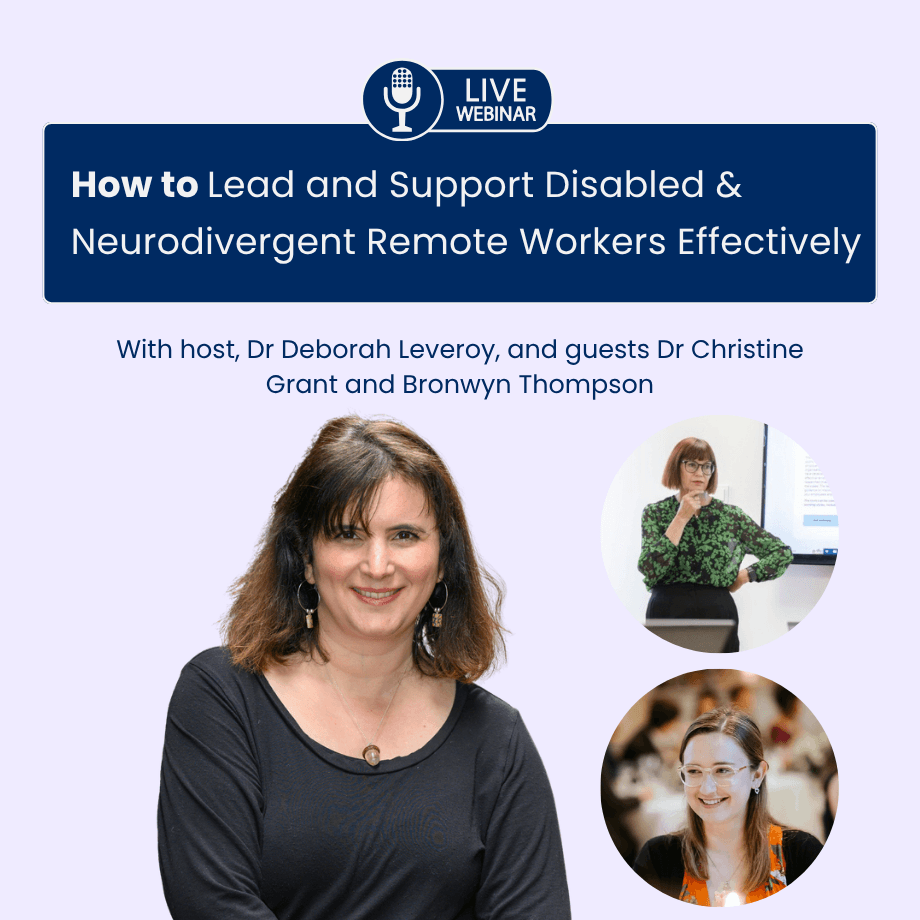
Webinar Overview:
This session explores the lived experiences of individuals with invisible disabilities, such as Functional Neurological Disorder, and how these intersect with neurodifferences such as ADHD, autism and dyslexia.
Alongside host Donna Stevenson, our guests speakers from FND Dimensions cover a variety of topics aimed at raising awareness and boosting understanding.
Some of the topics covered are:
- The importance of awareness, belief, and inclusive design
- Personal stories and lived experiences
- The role of community and peer support
- Practical accommodations and societal change
Watch the Webinar Now
Key Takeaways:
1. Invisible Disabilities Are Not Always Invisible
Many symptoms of invisible disabilities, such as slurred speech or motor issues, are visible and often misunderstood.
2. Intersectionality Matters
Individuals often live with multiple diagnoses (e.g., FND, ADHD, chronic fatigue), which interact and complicate daily life.
3. Dynamic Disabilities
Conditions like FND fluctuate daily. The term “dynamic disability” better captures this variability than “hidden” or “invisible.”
4. Awareness Is Crucial
Lack of societal understanding leads to stigma, disbelief, and exclusion. Awareness must extend beyond the affected communities.
5. Simple Accommodations Make a Big Difference
Adjustments like softer lighting, quieter environments, and clearer communication can significantly improve accessibility.
Meet the Speaker

Donna Stevenson is Head of Training for neurobox. As Head of Training she develops and delivers high-quality neurodiversity Awareness Training and associated programs.
Donna started her career as a Nursery Nurse and a Primary School teacher where she developed a passion for supporting those learners with dyslexia. This then lead her to work for many years at the British Dyslexia Association (BDA).
Over the years at the BDA, she’s worked with children and adults with dyslexia; working within education and workplaces to raise awareness and champion the Dyslexia Friendly approach.
In 2022, she joined Succeed With Dyslexia (SWD) as Head of Training and Assessment, utilising her years of experience to create a global serviceShe continues her work supporting the community as a SWD Ambassador and a part of the ANND Coalition (Adult Network: Neurodiversity and Dyslexia), as well as SHADDA Local Dyslexia Association.


The Reality of Living with Invisible Disabilities