


What is Dyslexia?
Dyslexia is a neurodifference, that shapes the way someone processes information.
A dyslexic person may have enhanced skills and abilities in problem solving, creative thinking and general knowledge, however they are also affected by common difficulties such as:
- Breaking down sounds in words
- Remembering verbal instructions
- Reduced accuracy in spelling and reading
How can Dyslexia affect employees in the workplace?
Employees with Dyslexia may find working environments challenging without suitable adjustments in place – The amount of verbal instructions and time-constrained deadlines can impact an employees full potential, impacting their focus, ability to stay organised and understanding.
Common Dyslexia Traits
People with Dyslexia often show one or more of the characteristics listed below. It is important to note that being diagnosed with Dyslexia does not mean the person will experience this characteristics.

Difficulty Maintaining Focus
Especially on routine or less interesting tasks

Poor Self-Esteem
Constant struggles in academic and workplace settings can create feelings of inadequacy

Enhanced Pattern Recognition
Increased ability to find and recognise patterns with limited information

Difficulty Reading
Slow and inaccurate reading skills

Creative Thinking and Ideas
Bringing unique ideas and problem-solving skills

Difficulty Writing/Spelling
Slow and inconsistent spelling and writing skills
Dyslexia and Meares-Irlen Syndrome
It is important to highlight that people with Dyslexia may also identify with Meares-Irlen Syndrome, commonly known as Irlen Syndrome. It is a form of visual stress which can be related to the causing of reading difficulty for dyslexics.
Employers should be aware that employees with Dyslexia may be impacted by Irlen Syndrome, and appropriate adjustments should be made to accomodate the employee.

Supporting Dyslexia in the workplace
Under the Equality Act 2010, Dyslexia is recognised as a disability. This means employers have a legal responsibility to make reasonable adjustments, ensuring that individuals with Dyslexia are not disadvantaged at work.
It is important to note that an employee does not require a formal diagnosis for adjustments to be made.
Neurodiversity is about recognising and respecting different ways of thinking, learning and working.
 Adjusting Policies and Procedures
Altering the Physical Work Environment
Providing Additional Support or Aids

Organising Dyslexia inclusion or Dyslexia Awareness Training in the workplace
At neurobox we help workplaces become more inclusive for neurodifferent and disabled individuals via our tailored awareness training and coaching services.
Services we offer include:
-
Dyslexia Awareness Training for employees
At neurobox, our Awareness Training is designed to support staff in becoming more attuned to the needs of their neurodivergent colleagues—fostering greater understanding, empathy, and inclusion across the workplace. – Learn More Here
-
Dyslexia Awareness Training for managers
Our Awareness Training is specifically designed for Line Managers, equipping them with the knowledge and tools to better understand, support, and include neurodivergent individuals in the workplace – Learn More Here
-
Workplace Strategy Coaching
At neurobox, our bespoke one-to-one coaching service is designed to empower employees with tailored strategies to overcome workplace barriers and unlock their full potential – Learn More Here
Reasonable Adjustments for Dyslexia in the Workplace
Creating a Dyslexia-friendly workplace begins with understanding, flexibility and proactive support. Every individual is different, so a tailored approach is key.
A Workplace needs assessment is the perfect first step. It helps to identify individual challenges and offers practical, achievable adjustments for both employee and their organisation.
Some Examples of reasonable adjustments for Dyslexia in the workplace
| Area of Interest | Potential Adjustment(s) |
|---|---|
| Work environment |
|
| Assistive Technology |
|
| Workplace Strategy Coaching |
|
| Working Practices |
|
| Training |
|
Coping with Dyslexia at Work - Techniques & Strategies
Here are just a few practical ways individuals with Dyslexia can manage their workload and environment effectively:
-

1. Organising Workflow
-Build planning time into each day
-Create a template for daily tasks with suitable prompts
Tips/Tools – Mindmapping software such as, Mindview
-

2. Communication
– Provide simple, jargon free instructions. Highlighting key information is crucial.
-Regular check-ins with employees to check if they understand the task and whether they require extended deadlines.
-

3. Visual Aids
-Implement the use of screen overlays
-Use of Dyslexia friendly fonts for easier reading
Tips/Tools – Read&Write
Our Latest Dyslexia Resources
Explore our latest blogs on Dyslexia in the workplace.
10 Tips for Raising the Volume for Dyslexia Awareness
7 October 2025
Read More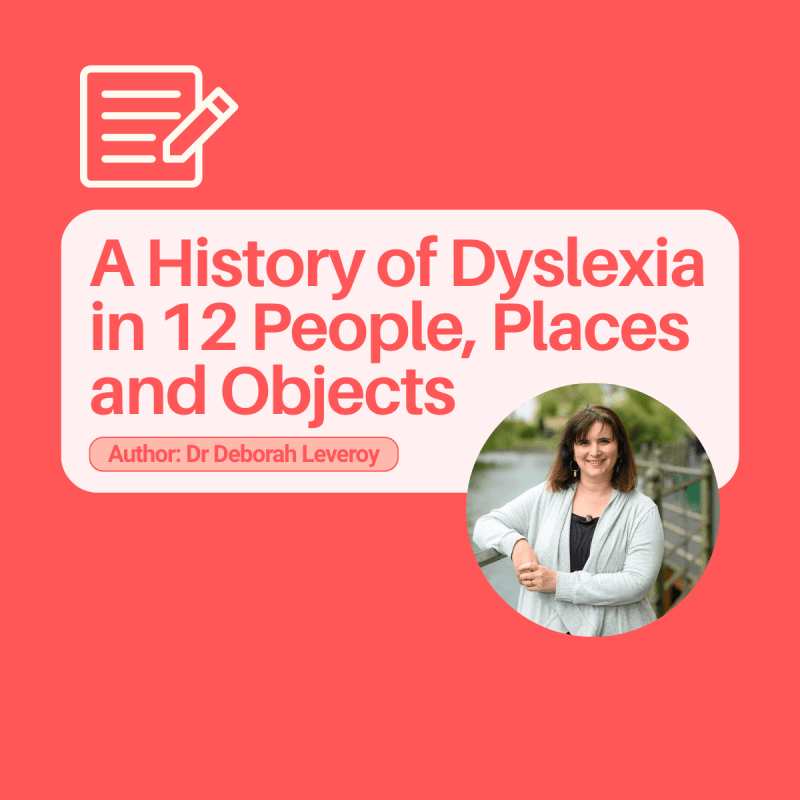
A Short History of Dyslexia in 12 Objects, People and Places
6 October 2025
Read More
Understanding Masking: A Deep Dive into Identity and Expression
2 October 2025
Read More
Celebrating Black History Month & Navigating Dyslexia
1 October 2025
Read MoreLooking for support? Contact us!
Every organisation is unique, and so are it’s people – that’s why we can tailor our sessions to your organisation.
Get in touch with the team
Our journey begins with a conversation – get in touch with Martin, Becky, Chris or Conal to find out more about how we can help and support you on your inclusion journey.
 01223 608491

Becky Stearn
Senior Client Consultant

Chris Pope
Client Consultant

Conal Durr
Client Consultant

Martin Kirkup
Head of Client Services
Tailored Strategies by Industry Experts
All our strategies are bespoke to you and your organisation and provided by our team of experts.
Drop us a message
"*" indicates required fields
Frequently Asked Questions about ADHD in the Workplace
Got questions? We’ve got answers. Can’t find what you need, get in touch with the team on hello@neurobox.co.uk
-
Does Dyslexia affect memory?
Yes, Dyslexia can affect a person’s memory, specifically working memory. This can affect the speed at which someone with Dyslexia processes information both verbally and written.
-
Do I have to disclose to my employer if I have dyslexia?
No, it isn’t a legal requirement to disclose your neurodiversity or disability to an employer.
-
What are some examples of workplace adjustments?
Workplace adjustments come in a variety of forms – They can be in the form of training or coaching services. Alternatively employers may provide assistive software packages or technology to assist you.
-
Do I need a Dyslexia diagnosis to receive support at work?
No you do not require a medical diagnosis to request adjustments. Employers have a duty to make reasonable adjustments even without a formal diagnosis.

Disability Confident Scheme - Dyslexia
The Disability Confident Employer Scheme (a Government scheme) provides organisations with the structure and process to implement inclusive recruitment practices, workplace adjustments, and manager training and create an inclusive culture for all.

What is the Disability Confident Scheme?
The scheme has 3 levels designed to support employers on their Disability Confident journey, these are: Disability Confident Committed (Level 1); Disability Confident Employer (Level 2) & Disability Confident Leader (Level 3).
All employers join the scheme at Disability Confident Committed (Level 1) and progress through the levels to achieve the one that’s right for their organisation. On completion of levels, you receive Disability Confident Certification.
As a Disability Confident Leader, we’re uniquely placed to guide organisations through the accreditation process from Levels 1 to 3. We can conduct a gap analysis, provide targeted recommendations, and support the implementation process.

10 Tips for Raising the Volume for Dyslexia Awareness
Dyslexia Awareness Week is a vital opportunity to amplify voices, challenge misconceptions, and celebrate neurodivergent strengths. This year’s theme — Raising the Volume — is a powerful call to action. Our 10-in-10 webinar aims to help individuals and organisations explore what it truly means to raise the volume for dyslexia....
Read more
A Short History of Dyslexia in 12 Objects, People and Places
Every October, Dyslexia Awareness Week invites us to reflect on what dyslexia means, how it has been understood, and how it continues to shape lives. For too long, dyslexia was seen only as a deficit. But history shows a richer story: of discovery resilience, advocacy, and creativity. Here, we...
Read more
Understanding Masking: A Deep Dive into Identity and Expression
Read more
Celebrating Black History Month & Navigating Dyslexia
Read more

Dyslexia Awareness Week : Supporting Employees Beyond Awareness
Dyslexia is often associated with reading, spelling and writing difficulties. But in the workplace, its impact can be much broader. For some employees, dyslexia can affect how they process information, organise tasks, manage their workload, communicate ideas or work under time pressure. For others, the impact may be far...
Read more
Thinking Inside the Box
Read more