


A few months ago, I was browsing the blog website ‘Medium‘ and came across an article about the grieving process and neurodiversity.
I’ve read a lot on neurodiversity and quite a bit on grief. Still, I’ve never considered the interplay between the two or how one could interact with the other.
The author began by describing how grieving was a process, with several theories, the most common of which, the five stages of grief model, was developed by Elisabeth Kübler-Ross, which looks something like this …
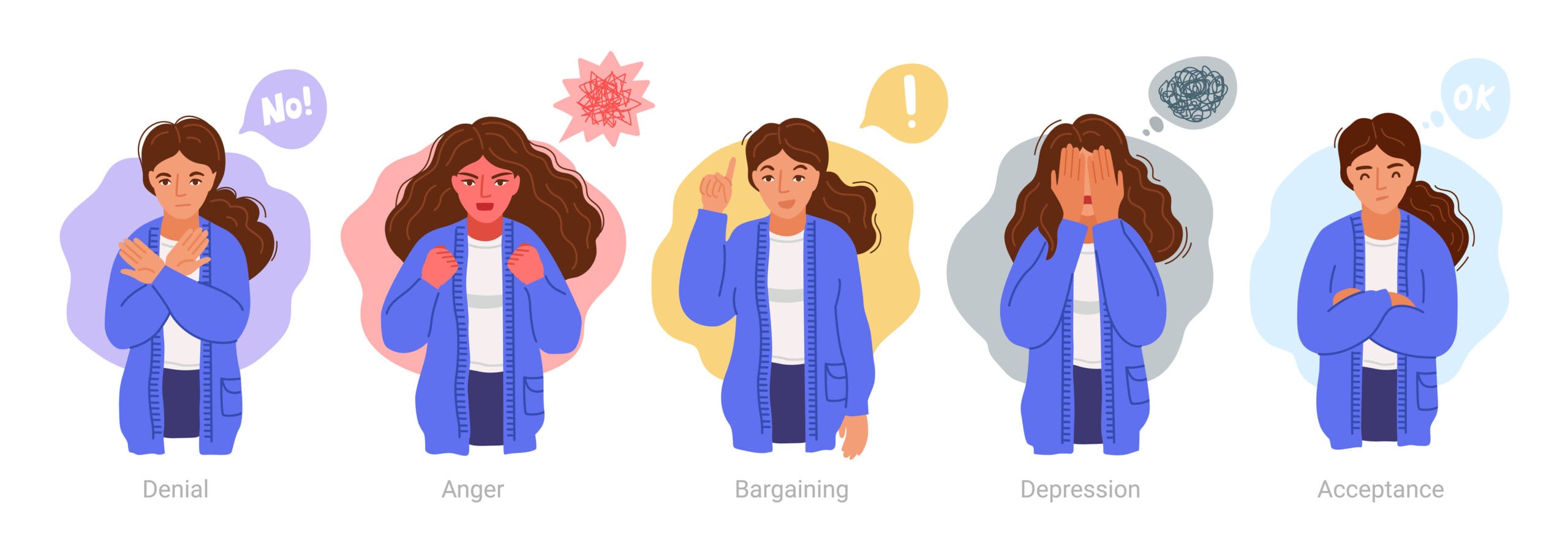
We go through different stages in the grieving cycle, from denial, anger, bargaining, depression and acceptance. The process is non-linear, slippery, and unfixed.
Then, the author of the blog goes on to discuss how she felt that being neurodiverse may have impacted her experience and the process of grief itself.
Since reading that blog, I’ve been playing it over in my mind, the significance of it for me, on a personal ‘ah ha’ level
At the Beginning
My early experience of grief, like most people, came from the passing of an elderly grandparent and my first pet hamster.
But then, a week before my 21st birthday, my dad, Michael, died from prostate cancer after a nine-year-long journey. I was at university at the time. I did all the ‘right’ things – took some time off, went home, spent time with my mum and friends. I agreed to see a counsellor.
In my late 20s, I went back to the hospice to train as a volunteer bereavement support worker, using the Cruise bereavement method. I had one client I saw once a month over about nine months. He was about my age and had also lost his dad to cancer. Helping him to work through his grief was unnerving and profound at the same time.
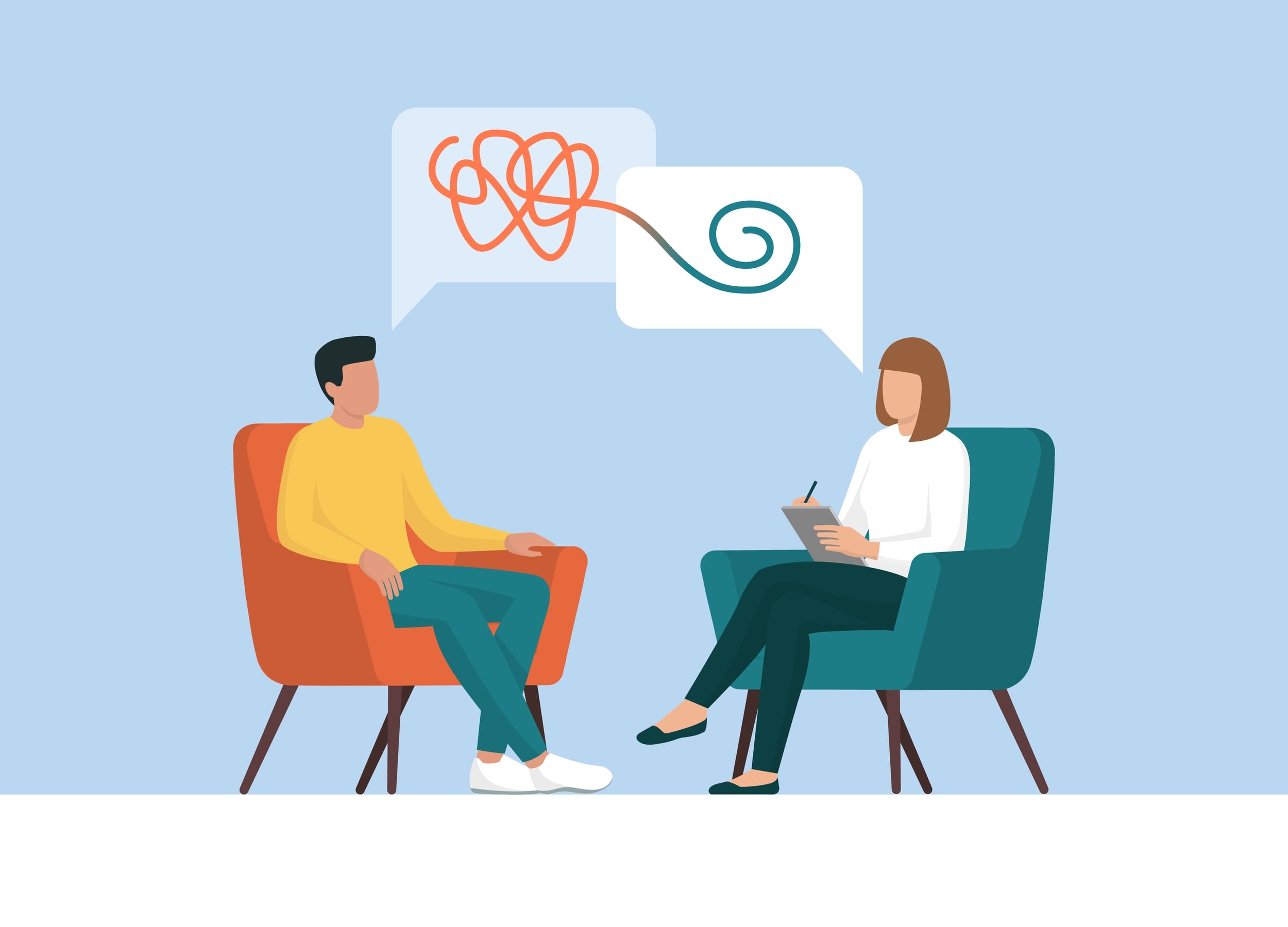
As part of the work, I had regular supervision where I shared and explored the jagged feelings that arose in me and the challenges of navigating the work of grieving. When I came to the end of the journey with the client, I decided it was still too raw and close to home for me, so I decided to stop and put it aside.
The Thunderclap
A busy life continued for the next eight years, with new relationships, friendships, research and work. It was early September 2014, and Mum and I had just returned from a friend’s wedding in France. The joys of the late summer evaporated with finding a golf ball-sized lump on her back. Within six weeks, we had a confirmed diagnosis, and the thing was already stage four. The next two years were stamped with the familiar pattern of hospital letters, chemo rounds, drug trials, hope, denial, and despair. The cycle ended when she died in what felt to me like a thunderclap in October 2016. The suddenness of her passing took me by surprise, even though, intellectually, I knew what we were facing. The phone screeched and rang out, calling me over and over.
While the storm of dad’s deterioration hovered over his final weeks, it gave us the gift of a long, intentional goodbye. In contrast, Mum’s thunder-like death cut us in two. We managed to soften it with the giggles of my nine-month-old daughter as we sat around the bed, singing nursery rhythms, hoping they could make it all better.
The Day After Yesterday
The nature of the task was blistering – I was a new mum, but I no longer had a mum. It seemed incongruous. Who was I? Now, both parents were gone. I felt treacherous as if I’d left them behind and taken up residence in a new place with a new role of my own making. I quickly got stuck into the probate work (much more taxing than a PhD!), as I printed out and colour-coded the many forms, bank accounts, insurance documents, and calls to HMRC. On and on. I enjoyed the intellectual challenge; it gave me somewhere to stuff my shock and numbness.
At the same time, I was having counselling, something I was familiar with and looked forward to almost. It was a space to hold me for an hour a week, surrounded by baby vomit and forms. In reality, it was just a waiting room, somewhere where I would go to pretend and play the part of the grieved.
18 months on from mum’s death, I found myself stuck in the holding room. I had not passed ‘go’ or collected £200 on my metaphorical monopoly board of grief. In my sessions, I would go round and around the conveyor belt of my mind, stuck in a cycle of
“what should I have done differently?”
“How angry I am with such and such a person.”
“What will I do about the probate or some other practicality?”
My counsellor had to stop me and tell me that I wasn’t processing my emotions. It was true, I wasn’t giving them breath. I had just dumped them in the left luggage room, I was not ready to claim my emotional inheritance. I pounded my emotions, like play dough, into intellectual thoughts- retelling the events and expressing ‘anger’, regret, and shame. There were very few times when I let the emotional load land for fear it would overwhelm and ultimately destroy me, never to return. On the two or three occasions I did give in and let the emotional tide come in, ebb and flow, I was left for days feeling dead myself. A half-person, grey and ashen, feeling physically and mentally sucked dry and more numb than before.

I stopped the counselling, returning to it a year later when the grief shifted into clinical depression. I woke at 3 am to meet the weight of a black fog pushing down on top of me. I had to let myself unpack my feelings; I couldn’t keep twisting them into a tight French plait. I learned, as my counsellor said, ‘if you don’t let these feelings out, they will continue to pull at your sleeve like a child in need of attention’.
I sat in the counsellor’s room, looking out the window. A bus went by with an advert for Frozen II on the side. “I think I’ve been frozen all this time, but now I feel I’m starting to thaw”. Cheesy, but true.

Frozen 2 – credit Disney/Frozen
From that point, it hasn’t been a smooth process, but the Frozen Bus was a defining moment in my understanding and shifting the patterns of grief.
On Reflection…
It’s only in the last few months that I’ve started to consider how my dyslexic/dyspraxic brain, my way of processing the world, may have impacted and interacted with my grieving journey. Ultimately, I will never know. I can’t run a controlled study with a grieving ND me and a non-ND me. But when I reflect on my challenge with expressing my emotions and how I could so easily intellectualise and control them. I wonder if this is a result of a form of sensory overload, whereby my internal processor just shut down, weighted down by the enormity of the emotional and sensory experience of grief and the lack of processing capacity in my brain.
Would it have been easier to process this experience of grief through a different form of therapy that didn’t rely solely on words – art or play therapy? Possibly. Who knows.
I’d like to hear about your experience if you’re reading this. If anything resonates on some level, please let me know.
Get in Touch with Deborah
If you or someone you know has experienced a bereavement and needs support, please contact: https://www.cruse.org.uk/
For practical advice see: https://www.gov.uk/after-a-death/bereavement-help-and-support
About the author

Dr. Deborah Leveroy is Neurodiversity and Inclusion Lead at neurobox. She works with organisations to advance neuro-inclusion strategy and practice. Deborah has a PhD in Dyslexia, inclusion and performer training from the University of Kent.
Her research is published by Routledge in peer-reviewed journals and edited collections. Current research interests include Neuroinclusive return to work practices and remote working. Previous roles include Disability Advisor for Remploy’s BBC workplace adjustment contract, Strategy Coach and Workplace Needs Assessor for PAM occupational health and Study Skills Tutor for several DSA providers.
Related readings


Commewnts (1
Grieving through motherhood and neurodifference
By: Dr Deborah Leveroy
Very true experience I felt the same although it was my nan that passed.
Nan saw me not the naughty girl like everyone else. I lost my true support ???? and still feel the loss hard when I let the crack open. But thts not very often. And not enough.
At the moment my step daughter is hair pulling, around her pony tail, has pulled 3/4 of her thick mid back length hair to a skinny mullet.
She is having psychotherapy through the school.SEN Team. They are not helping us with her diagnosis even though the private clinic said she is diverse. Adhd .
As adhd myself I grieved for the years I lost not knowing and don’t want her to loose out.
Her mum passed when she was 10.
She’s in need and I can’t help ????
Comments are closed.