Workplace Needs Assessments – the What and Why
At neurobox, we know that creating truly inclusive workplaces goes beyond good intentions — it requires practical tools, clear processes, and a shared understanding of how to support neurodivergent and disabled colleagues effectively.
One of the most powerful — yet often misunderstood — tools available to organisations is the Workplace Needs Assessment. We truly believe the workplace needs assessment plays a vital role. Not because every situation needs one, many don’t, but because when it’s done well, it can be game-changing.
Our webinars aims to untangle what a Workplace Needs Assessment is, how they work, and why they matter. Whether you’re an HR professional, a line manager, or someone navigating your own neurodiversity journey, this session is designed to give you the clarity and confidence to take action.
Watch Mark's Webinar
Webinar Overview:
Untangling a Workplace Needs Assessments: Supporting Neurodiversity and Disability at Work
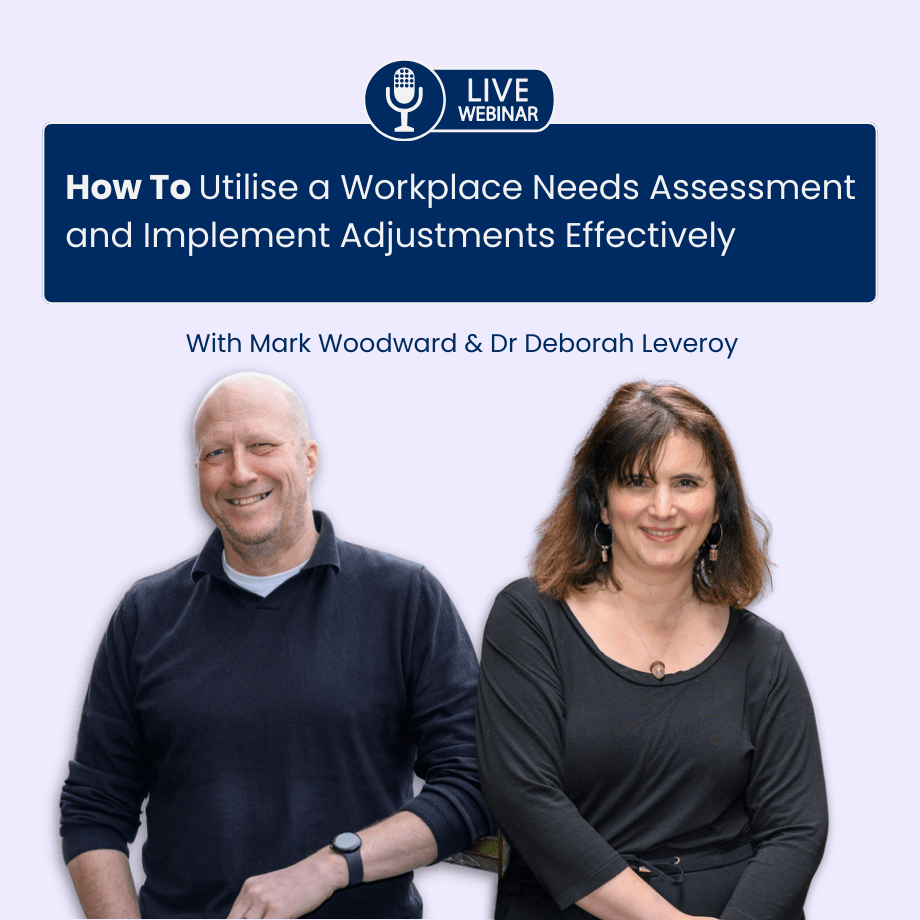
In this engaging and informative webinar, Mark Woodward, Head of Adjustments at neurobox, takes us on a deep dive into the purpose, process, and power of workplace needs assessments.
Hosted by neurobox Head of Training, Donna Stevenson, the webinar explores how Workplace Needs Assessment can help organisations meet their legal obligations under the Equality Act, while also fostering inclusive, supportive environments where neurodivergent and disabled employees can thrive.
Mark breaks down what a wWorkplace Needs Assessment involves, who it’s for, and how it can lead to meaningful, tailored adjustments that benefit both individuals and teams. From practical examples to legal context, this session is packed with clarity, compassion, and actionable advice.
Key Takeaways
- A workplace needs assessment isn’t a test — it’s a collaborative conversation designed to understand an employee’s role, strengths, and challenges.
- Adjustments don’t have to be expensive or complex. Often, small changes — like flexible start times, noise-cancelling headphones, or awareness training for teams — can make a significant difference. The key is to consider adjustments holistically: working practices, environment, equipment, technology, and training.
- Psychological Safety is important. One of the biggest barriers can be whether employees feel safe enough to ask for them. Creating a culture where people feel comfortable disclosing their needs early is essential for proactive, inclusive support. Very often people don’t feel safe asking for theseadjustments until they have no choice for example they may be on a performance Improvement plan
Meet our Speaker

Mark has worked in the field of neurodiversity for more than 12 years and has a wealth of knowledge and expertise in supporting not just people but also teams, managers, and organisations, from creating comprehensive programmes to individual training and coaching.
Prior experience in senior management and operational roles has given Mark an important understanding and awareness of both the needs of the organisation, managers, and of the individual employee.


ADHD and Motivation Bridges


Good Intentions – 5 strategies to help manage your time